Geotechnical laboratory testing in Auckland forms the cornerstone of responsible earthwork design, foundation engineering, and infrastructure development. This category encompasses the physical and mechanical analysis of soil and rock specimens recovered from boreholes, test pits, and outcrops across the region. For engineers and contractors operating within the Auckland Unitary Plan area, laboratory data provides the quantifiable parameters needed to assess bearing capacity, settlement potential, slope stability, and seismic response. Without rigorous testing, assumptions about ground behaviour remain speculative, introducing unacceptable risk into projects ranging from residential subdivisions to motorway extensions. The laboratory serves as the bridge between field exploration and numerical modelling, transforming raw samples into actionable engineering properties.
Auckland's geological setting demands particular attention to laboratory protocols. The region is underlain by a complex mosaic of Waitemata Group sandstones and siltstones, Pleistocene alluviums, and extensive volcanic deposits from the Auckland Volcanic Field. Residual soils derived from in-situ weathering of these materials—particularly the clay-rich products of basalt decomposition—exhibit variable strength and shrink-swell characteristics that cannot be reliably estimated from index tests alone. A comprehensive soil mechanics study becomes essential when dealing with these geologically young, often metastable materials. Coastal and estuarine sediments, including compressible marine clays found along the Waitemata Harbour margins, further complicate the geotechnical picture and require specialised consolidation and strength testing.
New Zealand's regulatory framework directly mandates laboratory testing through NZS 4404:2010 for land development and subdivision engineering, while the Building Code clause B1 (Structure) requires geotechnical verification via acceptable solutions or specific design. The New Zealand Geotechnical Society guidelines, aligned with international standards such as ASTM and ISO, govern test methodologies. For critical infrastructure, MBIE and NZ Transport Agency Waka Kotahi specifications often prescribe minimum testing frequencies and report formats. Soil classification in accordance with the Unified Soil Classification System (USCS) and AASHTO standards is routinely required to establish design parameters consistent with NZS 1170.5 for seismic actions and the NZTA Bridge Manual.
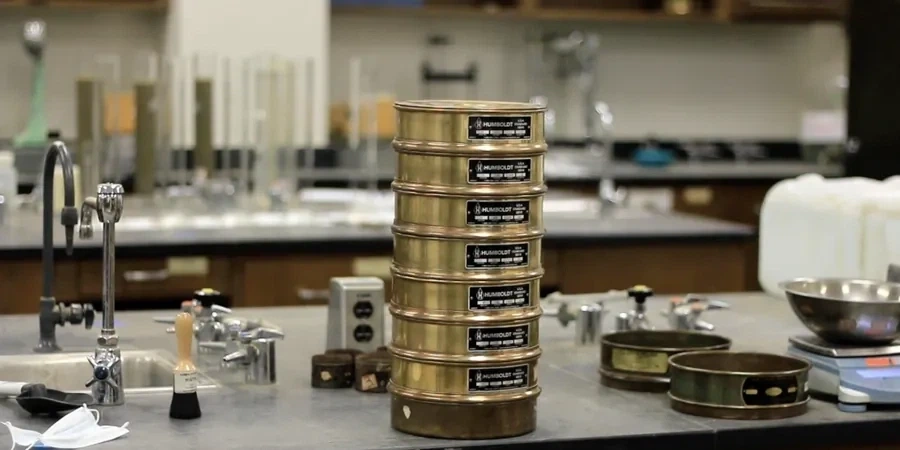
Projects across Auckland routinely trigger the need for advanced laboratory testing. Medium-density housing developments on weathered Waitemata Group terrain require direct shear and consolidation testing to validate foundation bearing pressures and predict settlement. Deep excavations for commercial basements in the CBD rely on triaxial test results to model retaining wall performance and base heave. Linear infrastructure, such as the City Rail Link extensions, demands complete particle size distribution curves through combined sieve and hydrometer analysis to assess drainage and liquefaction potential. Even smaller-scale works, like retaining walls on volcanic ash soils, benefit from laboratory-derived effective stress parameters to avoid overconservative—or unconservative—designs.
Residential developments typically require soil classification tests (USCS/AASHTO), Atterberg limits, and direct shear or triaxial tests to determine bearing capacity and settlement parameters. On volcanic ash or residual clay sites, shrink-swell testing and consolidation analysis are also common. The specific suite depends on the foundation type and the findings of the site investigation, but classification is almost always the starting point.
Auckland's volcanic soils, derived from basalt and tuff, are often highly variable, structured, and sensitive to remoulding. Laboratory programmes must include careful specimen preparation to preserve natural fabric, and tests like triaxial compression with pore pressure measurement are preferred over simpler methods. Residual soils from basalt can exhibit apparent cohesion that degrades upon wetting, requiring saturated strength testing.
Key standards include NZS 4402 (methods of testing soils for civil engineering purposes) and NZS 4404:2010 for subdivision earthworks. Test methods often reference ASTM or ISO equivalents. The New Zealand Geotechnical Society's guidelines for earthquake design (Module 4) and the NZ Transport Agency specifications also dictate testing requirements for seismic and infrastructure projects.
Turnaround times vary with test complexity and laboratory workload. Basic classification and index tests may be completed within three to five working days. Consolidated-undrained triaxial tests with pore pressure measurement can require two to four weeks due to saturation and consolidation stages. Rush testing can often be arranged for time-sensitive projects by prior agreement with the laboratory.